
Let’s be real—when you say “poetry analysis,” most high schoolers let out a collective groan. And honestly? It’s not their fault. Poetry can feel abstract, disconnected, and painfully irrelevant if not taught with the right tools. But what if poetry analysis could actually be meaningful, engaging, and even (gasp!) fun?
Too often, students are thrown into poetry with no clear structure or scaffolding. They're told to "find the theme" or "analyze the figurative language" without ever being taught how to do it. That leads to blank stares, shallow interpretations, and a lot of low-quality work. Teachers are left scrambling to reteach concepts like tone, diction, and structure—usually while juggling a million other things.
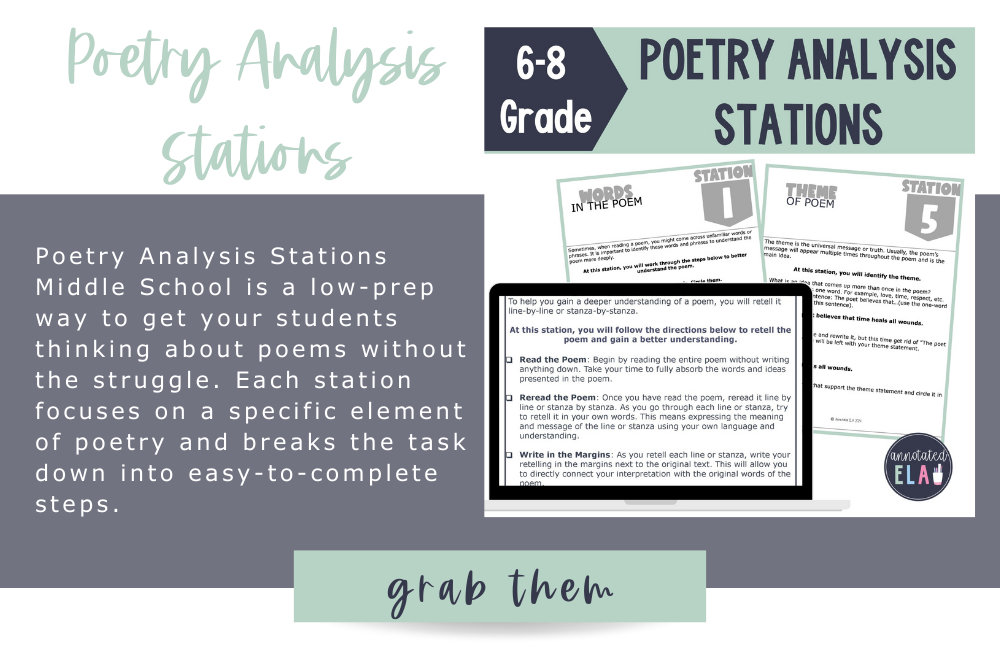
That’s where poetry stations come in. Using poetry task cards and stations designed specifically for high schoolers gives students the tools they need to deeply analyze a poem—without overwhelming them. Each station can target a specific literary skill, like identifying figurative language, analyzing tone and mood, or interpreting theme.
Break Poetry into Skills-Based Tasks
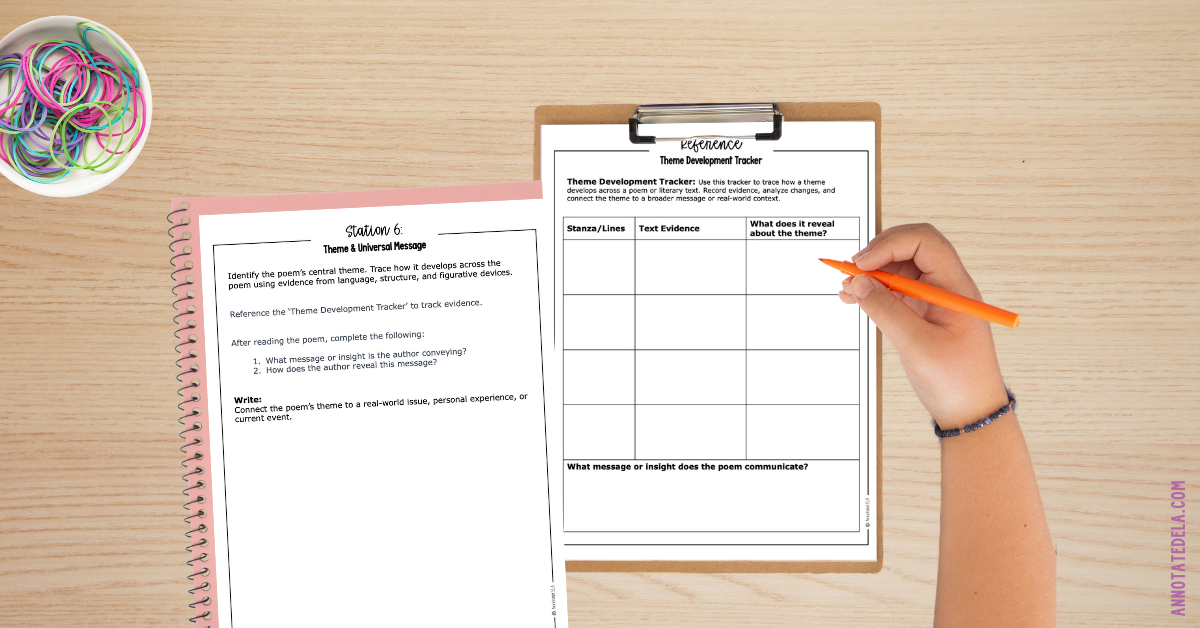
Instead of assigning one giant “analyze this poem” worksheet, break the work into smaller, focused tasks. Each task should target a single skill—like figurative language, diction, or structure. This helps students isolate what to look for and practice without feeling lost.
Poetry Analysis Station Idea
One station can guide students through identifying figurative language and connecting it to theme. Another might focus on shifts in tone and what they reveal about the speaker’s emotional state. Each poetry analysis station gives students a small task so the focus is on the depth and understanding.
Scaffold Student Thinking With Prompts
Use open-ended, standards-aligned questions that gradually push students toward deeper thinking in poetry analysis. Avoid “guess what I’m thinking” traps and give them a path.
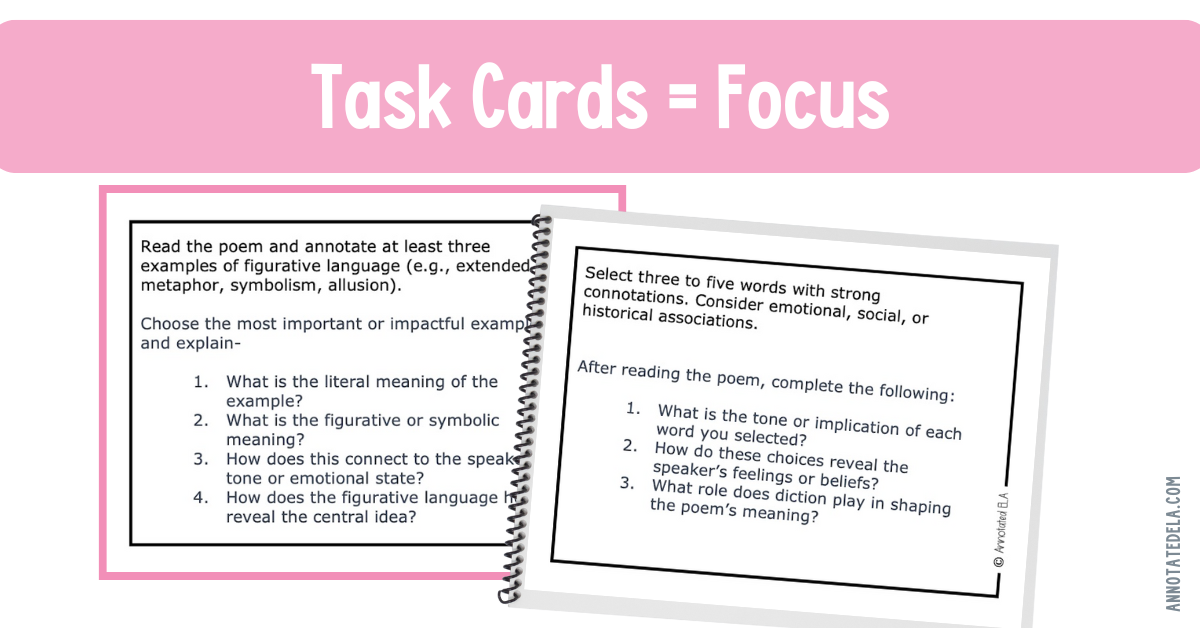
Task cards or written prompts that build on each other are a great way to get started. Build from identification (“What’s the tone here?”) and move toward interpretation (“How does the tone shift reflect the speaker’s mindset?”).
Add Movement and Choice with Poetry Stations
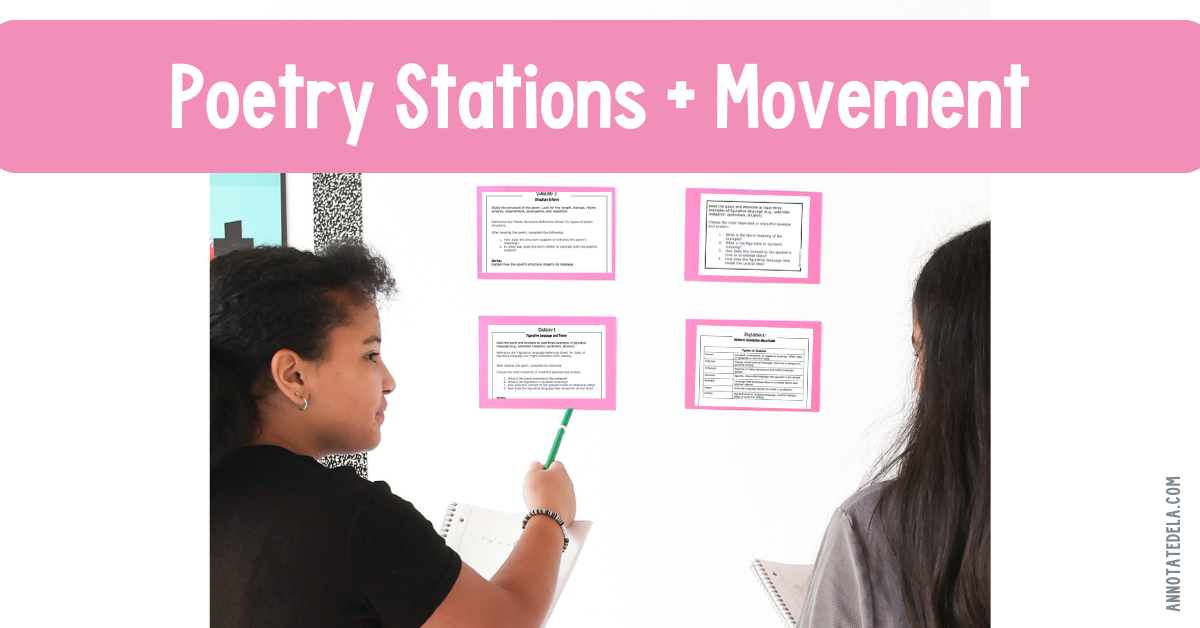
Turn your poetry unit into a mini workshop with stations. This breaks up monotony, increases engagement, and encourages peer conversation.
Set up 5–7 stations around your classroom. Let students rotate solo or in pairs, or choose their order. Each station = 10–12 minutes of focused, independent thinking.
Make Room for Reflection and Synthesis
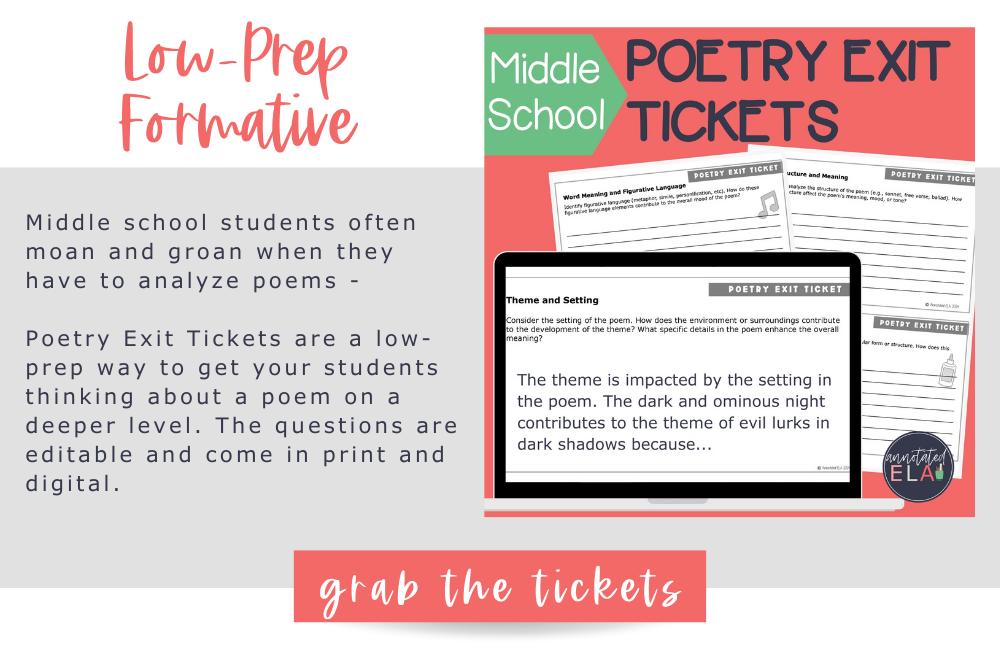
After students rotate through stations, offer a space to pull their thinking together. This could be a short writing response, a group discussion, or a quick formative check-in.
Add a bonus and add a challenge station or extension task for early finishers (or your gifted kiddos who are so over it after five minutes).
Build Consistency with Reusable Routines
Once students learn the station model, you can reuse the format across your poetry unit—or even other genres. The predictability builds confidence and independence.
It reduces overwhelm (no more “just analyze the poem” blank stares).
It’s easy to differentiate—stations can be leveled or grouped.
It fits into multiple formats: whole unit, 1-day workshop, or quick warm-ups.
It helps students actually understand how to analyze poetry—not just fake their way through a paragraph.
When poetry analysis feels purposeful and manageable, students are more likely to engage and actually understand what they’re reading.
With the right structure and support, your high schoolers can move beyond surface-level observations and start thinking like real literary analysts.
Want a done-for-you version of Poetry Analysis Stations?
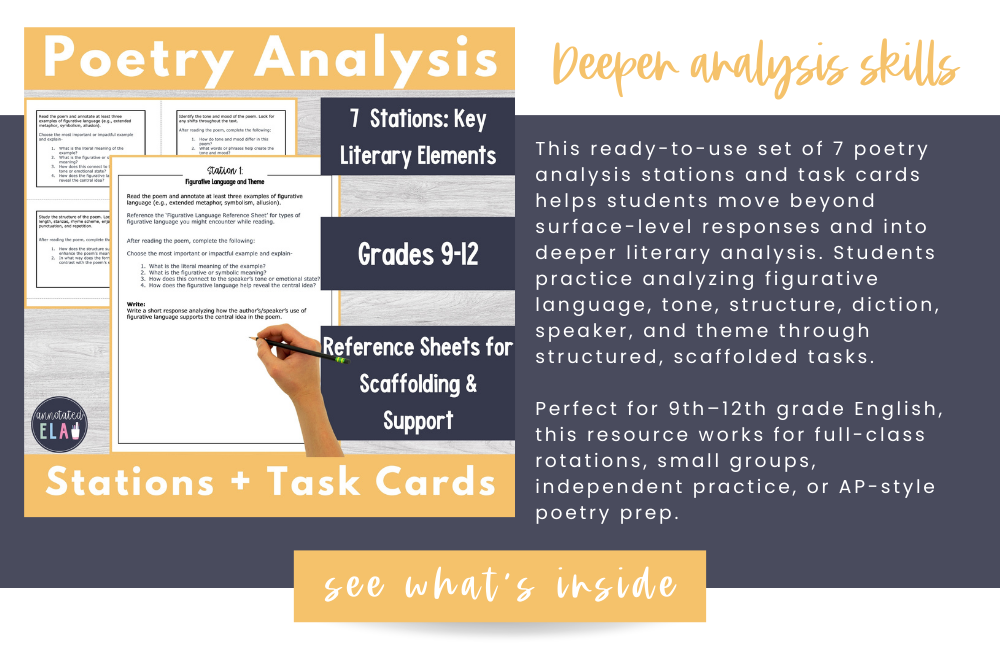
Poetry Task Cards & Stations include everything you need to get started—pre-written prompts, reference sheets, and flexible teaching tips to plug and play.
👉 Grab the resource here and give your students the poetry confidence they deserve.
You’re currently reading one stop in our Teaching Poetry Fest blog hop! When you’re finished, hop on over to Julia Cafaro’s post about A Creative Twist on Found Poetry for National Poetry Month to keep the loop going, or visit the round-up post to take a look at all of the Teaching Poetry Fest ideas in one place.
More Articles on Poetry and Poetry Analysis
Ten Simple Poetry Month Activities to Engage Secondary Students
Twenty Engaging and Relatable Novels in Verse for Middle Grades
Grab this FREE resource to introduce poetry!